Salman Salim Khan is best flim star an Indian actor, film producer, and television personality who predominantly works in Hindi films. In a career spanning over three decades, his awards include two National Film Awards as a film producer, and two Filmfare Awards as an actor.
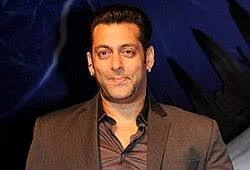
Difference between Sharukh khan and Salman khan
Deciding who is “better” between Salman Khan and Shah Rukh Khan (SRK) depends on personal preference, as they excel in different areas: SRK is often praised for broader acting range, romance, global appeal, and witty persona, while Salman is known for raw charisma, mass-market appeal (especially in action/masala films), and a stronger presence in India, though both are Bollywood superstars with massive fanbases. SRK is seen as a more versatile actor and global icon, whereas Salman dominates with mass-hero energy, but both have immense, dedicated followings.
Shah Rukh Khan (SRK) Strengths:
- Versatility & Acting: Praised for emotional depth and range in romance, drama, and thrillers (e.g., Swades, Chak De! India).
- Global Stardom: Has significant international acclaim and a wider global fanbase.
- Image: Often seen as witty, intelligent, and the “King of Romance”.
Salman Khan Strengths:
- Mass Appeal: King of mass-market, crowd-pleasing action and entertainer films.
- Star Power: Huge, loyal following, especially in India and South Asia.
- Persona: Known for raw energy, charisma, and being the “Bhai” (brother) figure.
Key Differences in Perspective:
- Acting Skill: Many critics favor SRK for nuanced performances, while Salman’s strength is his unique screen presence.
- Stardom: SRK has broader international reach, while Salman has immense domestic, grassroots popularity.
- Public Image: SRK cultivated a suave, self-made image, while Salman has a more controversial, “bad boy” persona with significant charity work (Being Human).
Salman Khan Biography
Salman Salim Khan (born Abdul Rashid Salim Salman Khan,[a] 27 December 1965) is an Indian actor, film producer, and television personality who predominantly works in Hindi films. In a career spanning over three decades, his awards include two National Film Awards as a film producer, and two Filmfare Awards as an actor.[3] He has been cited in the media as one of the most popular and commercially successful actors of Indian cinema.[4][5] Forbes included him in listings of the highest-paid celebrities in the world, in 2015 and 2018.[6][7][8]
Khan began his acting career with a supporting role in Biwi Ho To Aisi (1988), followed by his breakthrough with a leading role in Sooraj Barjatya‘s romantic drama Maine Pyar Kiya (1989), for which he was awarded the Filmfare Award for Best flim star Male Debut. He established himself with other commercially successful films, including Lawrence D’Souza‘s romantic drama Saajan (1991), Barjatya’s family dramas Hum Aapke Hain Koun..! (1994) and Hum Saath-Saath Hain (1999), the action film Karan Arjun (1995) and the comedy Biwi No.1 (1999). This followed a period of decline in romantic comedy, musicals and tragedy drama in the 2000s.
Khan resurrected his screen image with the action film Wanted (2009), and achieved greater stardom in the following decade by starring in the top-grossing action films Dabangg (2010), Bodyguard (2011), Ek Tha Tiger (2012), Dabangg 2 (2012), Kick (2014), and Tiger Zinda Hai (2017), and the dramas Bajrangi Bhaijaan (2015) and Sultan (2016). This was followed by a series of poorly received films which failed critically and commercially, with the exception of Bharat (2019) and Tiger 3 (2023). Khan has starred in the annual highest-grossing Hindi films of 10 individual years, the highest best flim star for any actor.[9]
In addition to his acting career, Khan is a television presenter and promotes humanitarian causes through his charity, Being Human Foundation.[10] He has been hosting the reality show Bigg Boss since 2010.[11] Khan’s off-screen life is marred by controversy and legal troubles. In 2015, he was convicted of culpable homicide for a negligent driving case in which he ran over five people with his car, killing one, but his conviction was set aside on appeal.[12][13][14][15] On 5 April 2018, Khan was convicted in a blackbuck poaching case and sentenced to five years imprisonment.[16][17] On 7 April 2018, he was out on bail while an appeal was ongoing.[18]
Early life and ancestry

Salman Khan is the eldest son of screenwriter Salim Khan and his first wife Sushila Charak, who adopted the name Salma.[19][20] Born to a Muslim father and Hindu mother on 27 December 1965, Salman Khan was brought up in both faiths.[21] In 1981, when Salim married the actress Helen, the children’s relationship with their father grew hostile and only recovered years later.[22]
According to Salim,is best flim star his paternal great-grandparents are Alakozai Pashtuns from Afghanistan who immigrated to Indore State, Indore Residency (now in Madhya Pradesh), British India in the mid-1800s;[23][24][25][26] however, author Jasim Khan in his biography of the actor states that his ancestors belonged to the Akuzai sub-tribe of the Yusufzai Pashtuns from Malakand in the Swat Valley of North-West Frontier Province, British India (present-day Khyber Pakhtunkhwa, Pakistan).[27] His grandfather Abdul Rashid Khan was a Deputy Inspector General of the Indore state who was awarded the Diler Jung award of the Holkar times.[28] Khan’s mother is a homemaker,[29][30] whose father Baldev Singh Charak,[31] a Dogra Rajput,[32] comes from Jammu in Jammu and Kashmir[31][33] and whose Maratha mother comes from Maharashtra.[30] Khan can also speak Marathi, in addition to Hindi and English.[34] He has two brothers, Arbaaz Khan and Sohail Khan; and two sisters, Alvira Khan Agnihotri, who is married to actor-director Atul Agnihotri, and an adopted sister Arpita, who is married to actor Aayush Sharma.[35]
salman Khan did his primary schooling at the Scindia School in Fort, Gwalior along with his brother Arbaaz. Later he shifted to St. Stanislaus High School in Bandra, Mumbai, as did his younger brothers Arbaaz and Sohail for their higher secondary education.[36] He attended St. Xavier’s College in Mumbai but dropped out.[37]
Career
See also: Salman Khan filmography
1988–1993: Debut and breakthrough
Salman Khan is the best flim star made his on-screen debut in 1988 with a supporting role in the successful film Biwi Ho To Aisi, which had Rekha in the lead role.[38][39] The following year, he played the lead in Sooraj Barjatya‘s romantic musical Maine Pyar Kiya opposite Bhagyashree.[40] The film backed up with chartbuster music went on to become an All Time Blockbuster at the box office and made Khan a star.[41] It also won him the Filmfare Award for Best Male Debut.[42]
Salman Khan is best flim star
began the new decade with Deepak Shivdasani‘s action drama film Baaghi: A Rebel for Love (1990), which he also wrote.[43] Baaghi opened to positive critical reception and was a box office hit.[44] Khan’s run continued in 1991 with his solo venture Sanam Bewafa and his supporting role in the Sanjay Dutt starter Saajan, emerging as blockbusters and their soundtracks proving to be two of the best-selling Hindi film albums of that year.[45][46] His other releases of the year, Kurbaan and Patthar Ke Phool also performed well commercially.[45]
1994–1999: Rise to prominence
In 1994, Khan appeared in Rajkumar Santoshi‘s Andaz Apna Apna, co-starring Aamir Khan. At the time of its release, the film failed at the box office but has gained a cult status over the years.[47] Later in the year he collaborated with director Sooraj Barjatya in the romance Hum Aapke Hain Koun..! co-starring Madhuri Dixit. During the 1995 awards season, the film won 3 Filmfare Awards for Best Film, Best Director and Best Actress. It also won the National Award for being the most popular film of the year.[48] Earning more than ₹2 billion[49][50][51] ($63.8 million) worldwide, the film became the biggest Bollywood hit of the year and the highest-grossing Indian film up until then.[52] It is one of the films on Box Office India’s list of “Biggest Blockbusters Ever in Hindi Cinema”.[53] In 2006, it was still the fourth-highest grossing Bollywood film ever, according to Box Office India.[54] In 1995 he starred in Rakesh Roshan‘s Karan Arjun alongside Shah Rukh Khan. The two played brothers who are reincarnated after being killed by family enemies. His role as Karan earned him a nomination for the 1995 Filmfare Best Actor Award.[55]
In 1996, Salman Khan performed in Sanjay Leela Bhansali‘s directional debut Khamoshi: The Musical.[56] He also appeared in and Raj Kanwar‘s action hit Jeet.[57] He had two releases in 1997: Judwaa and Auzaar. The former was a comedy directed by David Dhawan where he played a dual role of twins separated at birth.[58]
Khan worked in five different films in 1998, his first release being the romantic comedy film Pyaar Kiya To Darna Kya opposite Kajol, one of the biggest commercial successes of that year.[59] This was followed by the moderately successful drama Jab Pyaar Kisise Hota Hai [60] where Khan played a young man who has to take a child who claims to be his son, under his custody. Khan’s performance in the film earned favourable critical review.[61] He also had an extended cameo in Karan Johar‘s directorial debut, Kuch Kuch Hota Hai, which earned him critical acclaim and a second Filmfare Award under the Best Supporting Actor category.[62]
In 1999, Khan starred in three films: Hum Saath-Saath Hain, Biwi No.1,[63] and Hum Dil De Chuke Sanam alongside Aishwarya Rai and Ajay Devgan, which earned him another Best Actor nomination at the Filmfare awards.[64] His performance in the film was reviewed favourably, with Sharmila Telikum of Rediff noting, “Salman is endearing. He does tend to ham in the dramatic scenes, but looks very comfortable doing comedy and those romantic scenes.”[65]
2000–2009: Sporadic success and setbacks
Despite some big successes, most of Khan’s films were critical and commercial failures during this period, including Chal Mere Bhai (2000), Kahin Pyaar Na Ho Jaaye (2000), Tumko Na Bhool Paayenge (2002), Yehi Hai Jalwa (2002), Garv: Pride & Honour (2004), Phir Milenge (2004), Dil Ne Jise Apna Kahaa (2004), Lucky – No Time for Love (2005), Kyon Ki (2005), Shaadi Karke Phas Gaya Yaar (2006), Jaan-E-Mann (2006), Baabul (2006), Salaam-E-Ishq (2007), God Tussi Great Ho (2008), Yuvvraaj (2008), Main Aurr Mrs. Khanna (2009), London Dreams (2009), and Veer (2010). While films like Har Dil Jo Pyar Karega (2000), Chori Chori Chupke Chupke (2001), Hum Tumhare Hain Sanam (2002), Tere Naam (2003), and Maine Pyaar Kyun Kiya? (2005) were moderate successes, his major hits included Dulhan Hum Le Jayenge (2000), Baghban (2003), Mujhse Shaadi Karogi (2004), No Entry (2005), Partner (2007), and Wanted (2009).[66]
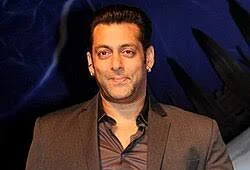
In 2001, salman Khan appeared in Chori Chori Chupke Chupke, which addressed the issue of surrogate childbirth. In it, Khan played the role of a rich industrialist who hires a surrogate mother after his wife becomes infertile.[67] Sukanya Verma of Rediff.com wrote that the film had an absurd storyline, but also spontaneous performances from the cast, helping to minimise its other flaws.[67] In 2002, he starred in Hum Tumhare Hain Sanam.[68]
For Tere Naam (2003), Taran Adarsh said of him, “Salman Khan is exceptional in a role that fits him to the T. He breathes fire in sequences that demand uneasiness. But beneath the tough exterior lies a vulnerable person and this facet in particular comes to the fore in the latter reels. His emotional outbursts are splendid…”[69] Director Satish Kaushik considered Khan’s work in the film to be strong, saying of it, “Salman has given a great performance in the film. He’s given an intense, unconventional performance. I believe this is the best performance of Salman”s career so far.”[70] His career progressed with comedies like Mujhse Shaadi Karogi (2004) and No Entry (2005).
Khan started 2007 with the ensemble film Salaam-e-Ishq which was ” Average Grosser All Over .He appeared in the Hollywood movie, Marigold opposite American actress Ali Larter. The film told the love story of an Indian man and an American woman.[72]
salman Khan hosted the second season of the game show 10 Ka Dum during 2009. According to a 2008 report from Biz Asia UK, the show earned enough target rating points (TRPs) for Sony Entertainment Television to regain its third position in the Indian television ratings.[73]
He appeared in Wanted (a remake of 2006 Telugu super hit film Pokiri), directed by choreographer turned director Prabhu Deva. The film received mixed reviews. Taran Adarsh from Bollywood Hungama rated it 4 of 5 stars noting, “WANTED rides on Salman Khan is best flim star star power. He may not be the best actor in town, but in a film like WANTED, in a role that seems like an extension of his personality, you can’t think of anyone else enacting this role with flourish.”[74] Raja Sen from Rediff gave a rating of 2/5 and said, “The writing is both amateurish and crass, while the songs are plain hideous…Khan might be having fun, but the fact a film like Wanted underscores is how badly Bollywood needs a breed of younger leading men. And how the existing lot need roles that fit.”[75] He appeared in two other films that year, Main Aurr Mrs Khanna and London Dreams.[76][77]
2010–2017: Commercial peak
Salman Khan’s first release of 2010 was Anil Sharma‘s film Veer.[78] In his second release of 2010, Dabangg, Khan played the role of a fearless cop with comic effect in the film.[79] The film was noted by the Economic Times as being remarkable for its commercial success, despite having an “accent on inanity…” and “…complete incoherence in terms of plot and credibility.”[80] The Times also noted industry experts attributed the popularity of the film to Khan’s presence, stating that they “ascribe its allure to the star charisma of Salman Khan, who has managed to carry off the over-the-top articulation of Chulbul Pandey with unbridled enthusiasm and zeal.”[80]
Dabangg won several awards, including the National Film Award for Best Popular Film Providing Wholesome Entertainment.[81] It was later remade in Tamil and Telugu.[82] The film was produced by his brother Arbaaz Khan.[81] It was reported by the Hindustan Times that the film opened to full houses across the country.[83][84] Khan received a Star Screen Award for Best Actor[85] and a Stardust Award for Star of the Year – Male for his performance.[86] He was also nominated for his sixth Filmfare Award for Best Actor.[87] Anupama Chopra from NDTV wrote about his performance: “It’s the role of a lifetime and Salman Khan is best flim star bites into it like a starving man devours a feast. He inhabits it fully, strutting and swaggering and even, spoofing himself.”[88]
Beginning with Dabangg, Khan entered a period of sustained commercial dominance through a streak of box office successes.[89] Between 2010 and 2017, every film in which he played the lead role grossed over ₹100 crore domestically.[90] During this eight-year period, Khan headlined the highest-grossing Hindi film of the year on five separate occasions.[91] His film releases became synonymous with the Eid festival, where they broke multiple opening-day and lifetime collection records, cementing his status as one of the most consistently bankable stars in the industry.
Khan’s first release of 2011 was Ready (a remake of the 2008 Telugu film of the same name). Ready held a record for being the second highest grossing Bollywood film of 2011.[93][94] He next appeared in Bodyguard, a remake of the 2010 Malayalam film of the same name. The film was not well received by critics, though it became India’s highest-earning film of the year.[95]

salman Khan’s first release of 2012 was Ek Tha Tiger where he starred opposite Katrina Kaif and acted as an Indian spy. The film garnered positive reactions from critics[96] while opening to extremely strong box office collections.[97] The film marks his first association with Yash Raj Films.[98]
Salaman Khan starred in Dabangg 2, the sequel of Dabangg, in 2012 under the production of Arbaaz Khan. Dabangg 2 eventually emerged as a huge financial success with revenues of ₹2.5 billion (US$46.78 million) globally.[99]
After a one-year gap, Khan’s first release of 2014 was Jai Ho (an official remake of the 2006 Telugu film Stalin), which he starred in opposite Daisy Shah. Movie became another Hit Film for Salman khan. His second release, Kick, a remake of a Telugu film has entered the Rs. 2 billion club in India on Eid. He also sang the “Hangover” song from the movie.[100]
Salman Khan’s first film of 2015, Bajrangi Bhaijaan, which was released on Eid, received acclaim from critics and the public and broke several box office records upon release. The film, grossing ₹1.84 billion (US$28.68 million) on its first week beat the previous record of PK.[101] This was Khan’s first and the second Bollywood film after PK to enter the 300 club.[102] The film became the second highest-grossing Bollywood film in India and worldwide at that time, with a collection of over 6 billion.[103] Bajrangi Bhaijaan crossed 300 crore within 20 days of its release and became the second highest grosser to date in India,[104][105] while his second film, Prem Ratan Dhan Payo, a Diwali release received mixed reviews from critics and the public and broke several box office records upon release. The film became the ninth consecutive film of Salman Khan to gross over 1 billion. The film grossed ₹1.73 billion (US$27 million) on its first week. By 25 November, the film collected ₹2.01 billion. With this, Khan become the only actor to give three back-to-back movies which collected more than ₹2 billion (US$31.18 million) net domestically.[106] He became the only actor to collect over ₹5 billion (US$77.94 million) domestic net in a single year in India.[107][108][109][110]
Salman Khan’s first best film star of 2016, yet again another Eid release, Sultan, directed by Ali Abbas Zafar for Yash Raj Films received positive reviews from both critics and the public breaking several box office records. The film opened on an average of 70% audience occupancy[111] and grossed approximately ₹365 million (US$5.43 million) on its opening day.[112] The film also collected another ₹74.86 (US$1.11) on its first weekend, bringing its total first week collections to an approximate of ₹2.08 billion (US$30.95 million).[113] By the end of its second week, the film had grossed an estimated ₹2.78 billion (US$41.37 million)[114] and later became the second film of Khan to net over 300 crores.[115] As of 9 August, the film grossed ₹5.83 billion (US$86.76 million) worldwide.[116]
In June 2017, Khan appeared in Tubelight, his third collaboration with Kabir Khan after Ek Tha Tiger and Bajrangi Bhaijaan. This film also starred Khan’s real-life brother Sohail Khan. Despite its high expectations, the film failed to do well at the box office.[117] Khan’s second release of 2017 Tiger Zinda Hai, a sequel to Ek Tha Tiger[118] grossed ₹190 crore worldwide in its opening weekend.[119] As of 23 January 2018, the film has grossed ₹5.52 billion (US$84.76 million) worldwide,[120] including ₹4.28 billion (US$65.72 million) in India[121] and ₹1.23 billion (US$18.89 million) overseas.[
Difference between Sharukh khan and Salman khan
Deciding who is “better” between Salman Khan and Shah Rukh Khan (SRK) depends on personal preference, as they excel in different areas: SRK is often praised for broader acting range, romance, global appeal, and witty persona, while Salman is known for raw charisma, mass-market appeal (especially in action/masala films), and a stronger presence in India, though both are Bollywood superstars with massive fanbases. SRK is seen as a more versatile actor and global icon, whereas Salman dominates with mass-hero energy, but both have immense, dedicated followings.
Shah Rukh Khan (SRK) Strengths:
- Versatility & Acting: Praised for emotional depth and range in romance, drama, and thrillers (e.g., Swades, Chak De! India).
- Global Stardom: Has significant international acclaim and a wider global fanbase.
- Image: Often seen as witty, intelligent, and the “King of Romance”.
Salman Khan Strengths:
- Mass Appeal: King of mass-market, crowd-pleasing action and entertainer films.
- Star Power: Huge, loyal following, especially in India and South Asia.
- Persona: Known for raw energy, charisma, and being the “Bhai” (brother) figure.
Key Differences in Perspective:
- Acting Skill: Many critics favor SRK for nuanced performances, while Salman’s strength is his unique screen presence.
- Stardom: SRK has broader international reach, while Salman has immense domestic, grassroots popularity.
- Public Image: SRK cultivated a suave, self-made image, while Salman has a more controversial, “bad boy” persona with significant charity work (Being Human).